
Memory, Injury, and the Missing Past
Just One LookThis thread follows how damaged memory, photographs, and testimony turn Grace Lawson’s blank spaces into an incomplete but newly meaningful account of the past.
increasing Bearing strength in each event
 decreasing
Bearing strength in each eventdecreasingThe Concert Dream
The Concert Dream
A memory without certainty
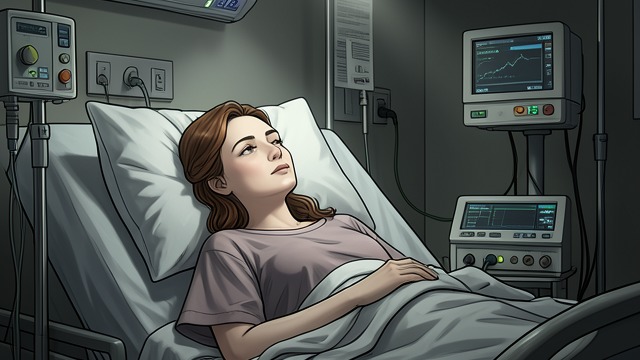
Grace Lawson revisits the Boston Garden stampede in recurring dreams, but the dream does not offer a stable record. It blends what she may have experienced with what she later read about the disaster, leaving her unable to distinguish memory from reconstruction.
The uncertainty is rooted in physical injury, not a chosen refusal to remember. After being crushed in the crowd, Grace woke from a coma with severe injuries and missing time around the concert. Her lost memories therefore become a vulnerable space that can be filled by imagination, other people’s accounts, or new evidence.
The cost of survival
The dream gives Grace a way to approach the catastrophe without claiming to master it. She knows the terror of being trapped beneath the crowd, but the earlier sequence remains indistinct, making her survival feel both real and strangely inaccessible.
That gap matters when the past returns through the photograph. Grace’s life has been shaped by an event she cannot fully recall, and the novel makes uncertainty part of her lived history rather than a puzzle she can simply solve. The dream is less a recovered transcript than a sign that buried experience remains active.
The Photograph as Memory

The Photograph as Memory
An image out of place
Grace finds an old photograph among pictures from a recent family outing. Its faded appearance and unfamiliar faces make it seem like a foreign object, but the young man who resembles Jack Lawson changes its meaning from a printing mistake into a challenge to her understanding of her husband.
The image does not explain itself. A woman’s face has been crossed out, the people are partly blurred, and Grace cannot identify most of them. Its power comes from what it withholds: the photograph supplies a visible past while denying her the context needed to interpret it.
Seeing and misseeing
Grace scans and enlarges the picture, hoping that technical clarity will produce personal certainty. Instead, the close-ups intensify her questions. Recognition remains tentative, and the image makes her confront how little she knows about Jack’s earlier life.
The photograph also shows how memory can be prompted by an object rather than recalled at will. Grace is not remembering a shared event; she is reading a trace that may belong to Jack’s history. The gap between image and knowledge becomes the story’s central tension: a record survives, but its meaning depends on people who have reasons to conceal it.
A Song Reopens the Night
A Song Reopens the Night
Testimony against the blank
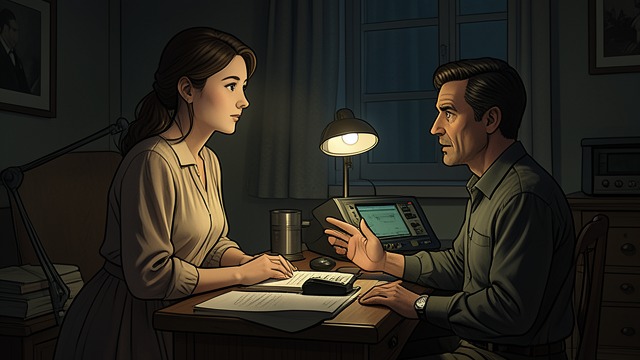
When Grace questions Jimmy X, his account supplies details she cannot retrieve herself. He describes the backstage confrontation with John Lawson, the accusation over “Pale Ink,” the struggle, and the first gunshot. His story gives Grace a possible sequence, but it arrives through a witness whose own guilt and long silence complicate its authority.
The music itself becomes an indirect archive. “Invisible Ink” and “Pale Ink” connect the obscure college band Allaw to the famous song and to a confrontation that helped precede the stampede. What had seemed like a vague coincidence now has a shape, though not yet a complete explanation.
The limits of reconstruction
Jimmy X’s testimony does not restore Grace’s lost memory. It gives her a narrative to compare with the photograph, the surviving accounts, and her own sense of the past. Each source illuminates part of the event while leaving other parts unresolved.
This distinction keeps memory from becoming a simple revelation device. Grace can learn what happened without experiencing it as a recovered recollection, and she can question whether the account is complete. The past becomes more legible, but it does not become fully hers to remember.
The Body Refutes the Story
The Body Refutes the Story
Physical evidence and contradiction
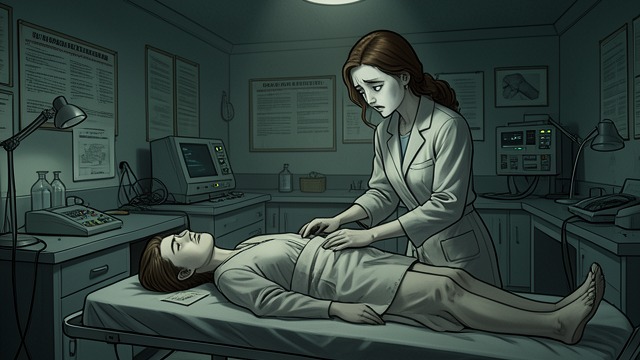
After Jack Lawson dies, Grace reviews the autopsy and recognizes that his body contradicts the account she has been given. Jimmy X and Gordon MacKenzie said Jack was shot at the concert, but Grace knows that Jack had no major scars and the autopsy confirms it.
This discovery does not immediately tell her who Jack was or what happened to John Lawson. It does, however, give her a concrete reason to reject a central part of the accepted story. Intimate knowledge of her husband’s body, once part of their private life, becomes a form of evidence.
Knowing through closeness
The scene complicates the idea that love guarantees knowledge. Grace did not know Jack’s concealed identity or the history he had kept from her, yet she knew his body well enough to notice what the public account could not explain.
Her certainty is narrow but consequential: she can establish that the story is wrong without yet proving the full alternative. The novel makes bodily familiarity a limited kind of truth, one that cuts through testimony but cannot answer every question about identity, motive, or responsibility.
The Unfinished Record
The Unfinished Record
What survives the dead
By the ending, several witnesses and participants are dead, while the surviving accounts do not resolve every contradiction. Grace understands more about the concert, the photograph, and Jack’s hidden past, but she cannot recover every missing fact from the people who carried it.
The cassette labeled “ALLAW” preserves a piece of the group’s music. Listening to it lets Grace encounter a remnant of the world Jack once inhabited, but a recording cannot explain all the decisions that followed or determine how a court would have judged the song’s similarity to “Pale Ink.”
Choosing what to carry
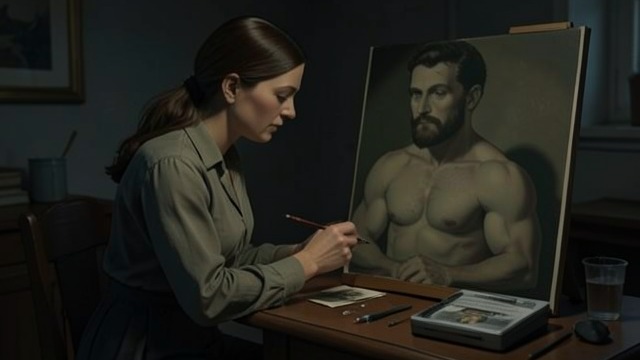
Grace’s final response is not to declare the past solved. She paints Jack, whom she loved as Jack, while recognizing that neither a spouse nor an individual can be known completely. The work gives expression to affection without pretending that affection cancels deception.
Her questions shift from reconstructing every old event to the present responsibilities of raising Emma and Max. The surviving fragments matter, but they do not have to dictate every choice. The novel leaves memory incomplete and still useful: a person can accept what the evidence changes while continuing to live with what it cannot settle.
Three months after the opening interview, before Jack Lawson disappears
The afternoon Grace finds the unfamiliar print in her developed photographs
During Grace’s later conversation with Jimmy X at the hospital
Two weeks after Jack Lawson’s funeral, when Grace reads his autopsy
Near the ending, when Grace considers what she can never know
